INEC says sample ballot papers for Saturday's nationwide mock accreditation will not carry party names or logos because the exercise is to test technology, not parties.
The Independent National Electoral Commission (INEC) has explained why the sample ballot papers that will be used for Saturday's nationwide mock accreditation will not bear the identities of political parties.
The clarification was given by INEC's Deputy Director of Voter Education and Publicity, Wilfred Ifogah, during an interview on Channels Television's _Politics Today_ on Friday.
According to Ifogah, the exercise is not partisan. It is designed to test INEC's readiness for the 2027 general elections.

*"This Is a Mock Exercise, Not Partisanship"*
"This is a mock exercise; we are not using it for any partisanship event. It is just something for those who come out to feel a sense of participation," Ifogah said.
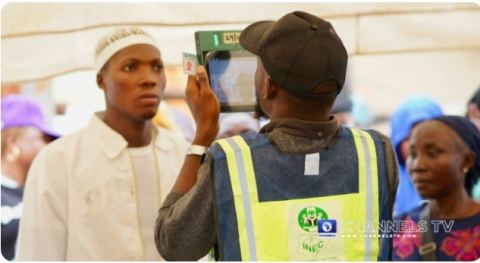
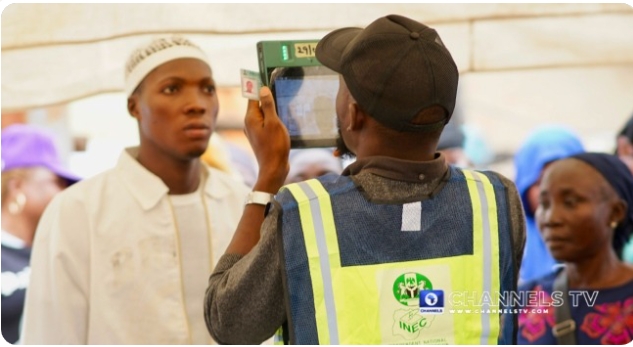
He explained that the sample ballot papers are pseudo-ballot papers. They are plain papers designed only to test whether the Bimodal Voter Accreditation System (BVAS) can capture images of result sheets correctly.
"No party is represented," he said. "We just want to see how the BVAS will capture the photographs of whatever we agreed is going to be the result sheets."
INEC Chairman, Prof. Joash Amupitan, had earlier made the same point on Wednesday during a meeting with Resident Electoral Commissioners from the 36 states and the FCT in Abuja.
"The ballot papers to be used are pseudo-ballot papers and not containing the name of the registered political parties. So, no registered name of any political party is going to appear and they will see it; it's going to be visible to everybody," Amupitan said.
*Why INEC Removed Party Names*
The decision was to address public concerns that the mock exercise could be used to manipulate the 2027 elections or to favour a particular party.
INEC said by removing all party names and logos, it is making it clear to everyone that the exercise is a technical test, not a real election and not a campaign.
The papers will be clearly distinguishable from real ballot papers used on election day.
*What INEC Will Test on Saturday*
The nationwide mock accreditation will hold on *Saturday, November 28, 2026, from 8:30 a.m. to 2:30 p.m.*
It will cover *17,676 polling units* — two polling units in each of Nigeria's *8,838 Registration Areas*.
INEC will test:
- Upgraded BVAS devices for voter accreditation
- Network connectivity for seamless upload of results
- The INEC Result Viewing Portal (IReV)
- The new electronic Form EC8A, which will automatically check for arithmetic errors and over-voting before upload
- Logistics, using the same arrangements adopted in Ekiti and Osun governorship elections
Materials for the exercise have already been deployed to states. Officials assigned to supervise it have travelled to their locations.
*A Live Stress Test, Not a Routine Drill*
Amupitan described the exercise as a live operational stress test, not a routine drill.
It will be the first nationwide test of BVAS and IReV since the 2023 general elections, according to Yiaga Africa Executive Director, Samson Itodo.
It will also test the 57,000 BVAS machines procured by the commission, and the electronic EC8A result sheets, which will be deployed nationwide for the first time.
RECs are to submit comprehensive technical audit reports by Monday after the exercise.
*What Voters Should Do*
INEC has requested all registered voters in the selected polling units to participate.
You do not need to vote for any party. You only need to come out, get accredited with BVAS, and experience what accreditation and voting will look like in 2027.
The exercise will also help voters understand the process before the real elections.
*2027 Election Dates*
The 2027 general elections will begin with the presidential and National Assembly polls on *January 16*, and end with governorship and State Houses of Assembly polls on *February 6*.
*Source: Channels TV / Punch / Vanguard, November 27, 2026*