Nigeria was not always one country. From ancient empires to 1914 amalgamation, independence in 1960, civil war, and democracy - this is the true story of how 250 tribes became one nation.
Nigeria is one country today, but it was not always so.
Before Nigeria, there were kingdoms, empires, city-states, and villages - over 250 ethnic groups, each with its own language, its own king, its own gods, and its own way of life. How did all of them become one nation called Nigeria? That is the story many schools never taught us properly.
*Before Nigeria: Great Kingdoms Already Existed*

Long before the British came, this land was already great.
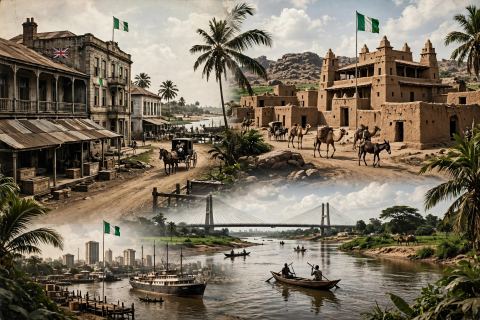
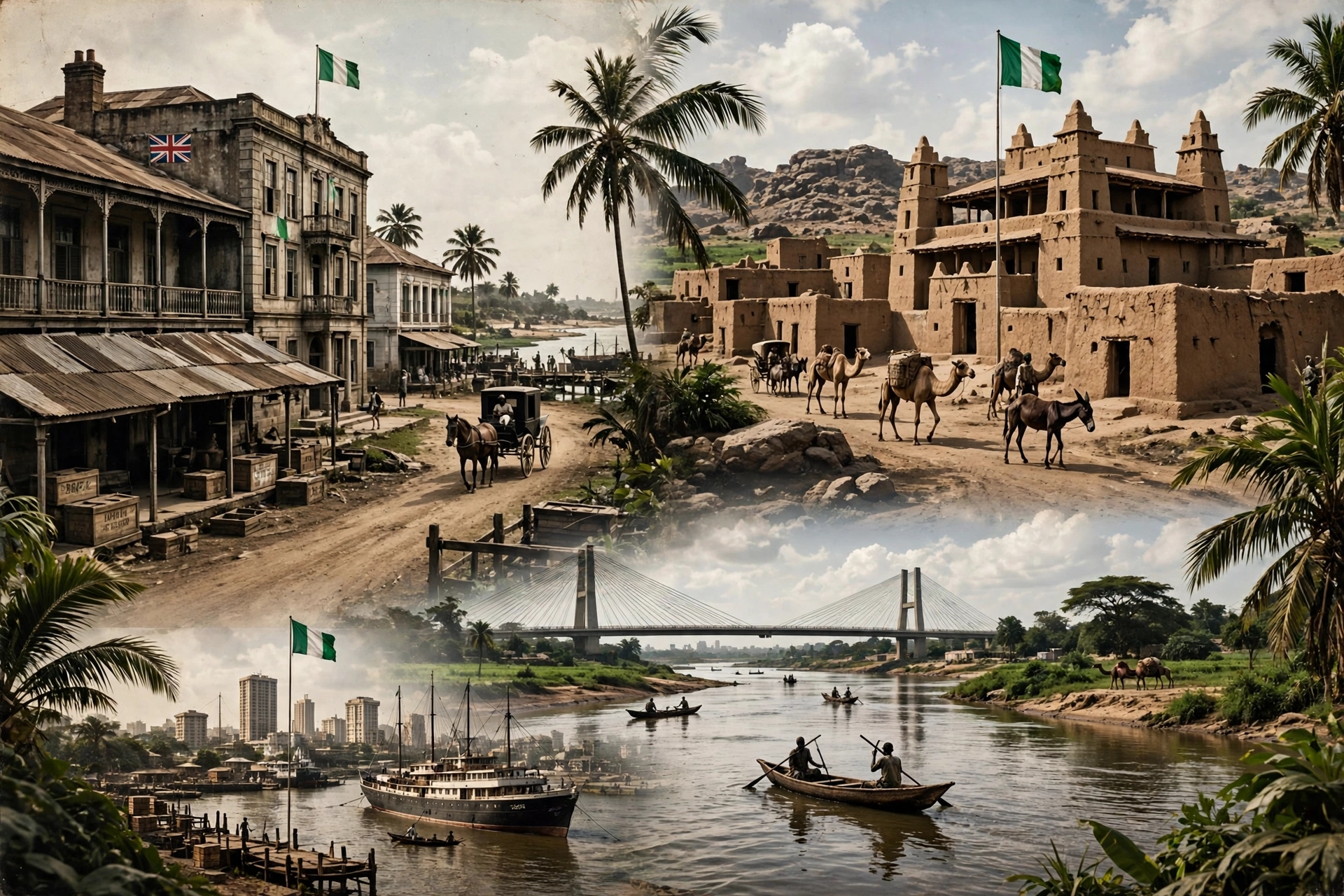
In the North, there was the Sokoto Caliphate, one of the largest empires in Africa, and the ancient Kano and Katsina trading cities. In the West, the Oyo Empire and the Ife Kingdom - the spiritual home of the Yoruba - were powerful centres of art, trade, and politics. The Benin Kingdom, in present-day Edo State, was famous across the world for its bronze works - so beautiful that Europeans who saw them could not believe Africans made them.
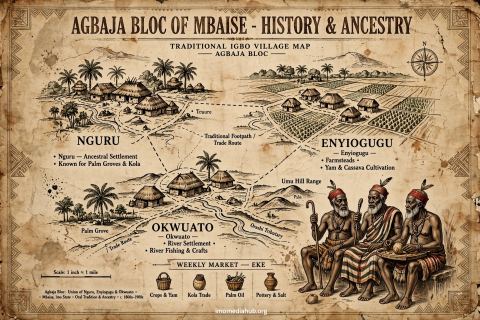
In the East, the Igbo had a unique system - no single king, but village assemblies where every man had a voice. The Aro, Onitsha, and Nri kingdoms traded far and wide.
And across the Middle Belt, the Tiv, Idoma, Igala, Nupe, Jukun, and hundreds of other peoples built rich farming and trading cultures.
Nigeria was never empty land waiting to be discovered. It was already full of civilisation.
*How The Name "Nigeria" Was Born*
The name Nigeria came from the River Niger - the great river that runs through the country.
In 1897, a British journalist named Flora Shaw - who later married Lord Frederick Lugard - suggested the name "Nigeria" for the British territories around the River Niger. Before that, the area was called the Northern and Southern Protectorates.
So the name itself was given by a foreigner. But the people inside it were already Nigerians in spirit, even before the name existed.
*1914: The Amalgamation That Changed Everything*
On January 1, 1914, Lord Lugard joined the Northern Protectorate and the Southern Protectorate together. That joining is called the Amalgamation.
It was not done because the peoples asked for it. It was done because Britain wanted one administration, one budget, one railway system, and easier control.
That is why many Nigerians still ask today: "Was amalgamation a marriage of love or a marriage of convenience?" It was a forced marriage - but 111 years later, we are still in that marriage.
Lagos became the capital. English became the official language. And a new country of many peoples was born.
*The Fight For Independence*
After amalgamation, Nigerians began to fight for freedom.
Men and women like Herbert Macaulay, Nnamdi Azikiwe, Obafemi Awolowo, Ahmadu Bello, Funmilayo Ransome-Kuti, Margaret Ekpo, and many others - some famous, some forgotten - demanded self-rule.
They formed parties, newspapers, trade unions, and youth movements. They went to London to negotiate. They were jailed, mocked, and threatened. But they did not stop.
Finally, on *October 1, 1960*, Nigeria became independent. The green-white-green flag was raised. The Union Jack came down. Nnamdi Azikiwe became Governor-General, and later President. Tafawa Balewa became Prime Minister.
Nigerians danced in the streets. We were free at last.
*Independence To Civil War To Democracy*
Freedom did not mean peace automatically.
In 1966, military coups shook the young nation. In 1967, the Eastern Region declared itself Biafra, and Nigeria entered a painful civil war that lasted till January 1970. Over a million people died - mostly from hunger and disease. It remains the darkest chapter in our history.
After the war, General Yakubu Gowon's slogan was "No Victor, No Vanquished" - we must rebuild as one.
Nigeria then went through decades of military rule, creation of states - from 3 regions to 36 states + FCT today - oil boom, oil bust, and finally return to democracy in 1999.
In 1999, Olusegun Obasanjo became civilian president, and since then, Nigeria has remained a democracy - imperfect, but still standing.
*What History Teaches Us Today*
Nigeria's history teaches us three lessons:
*1. We are stronger together.* No single tribe can make Nigeria great alone. Hausa, Yoruba, Igbo, and the over 250 other groups - we need each other.
*2. Unity is a choice, not an accident.* Amalgamation forced us together, but only love, fairness, and justice can keep us together.
*3. Our past is great, our future can be greater.* If kingdoms without electricity or internet could build Benin Bronzes, Ife arts, and Kano walls, what can we build today with education and technology?
Nigeria is not a mistake. Nigeria is a project - unfinished, but still full of promise.
Do not let anyone tell you Nigeria has no history. We have history older than many countries in Europe. And the best chapter is the one we are writing now.
_For More Original & Exclusive News Updates, articles, jobs, grants and other opportunities, Visit:_
_Website:_ https://imomediahub.org
_Join Our WhatsApp Channel:_ https://whatsapp.com/channel/0029VbB1Oqb1t90iAOStYS0p